Subtotal $0.00


When it comes to life at sea, safety isn’t just a guideline it’s a necessity. Fire hazards are one
of the biggest risks for vessels, whether they’re commercial ships, offshore platforms, or
leisure yachts. In the UAE, where maritime trade and marine tourism play such a vital role,
strict fire safety standards ensure that vessels remain safe and compliant.
Let’s break down what marine fire safety means in the UAE, the standards in place, and
some practical steps for staying compliant.
Why marine fire safety matters
Fires on vessels can spread quickly, often in confined spaces filled with fuel, electrical
systems, and flammable materials. Unlike land-based fires, help is not immediately at hand,
which makes prevention and preparedness absolutely critical.
In the UAE, where maritime activity is at the core of economic growth, authorities have put in
place rigorous safety measures to protect both crews and assets.
Fire safety standards in the UAE
Marine fire safety in the UAE is guided by international conventions and local regulations.
Some of the key frameworks include:
● SOLAS (Safety of Life at Sea): The International Maritime Organization’s
convention sets global requirements for fire protection, detection, and suppression on
ships.
● UAE Flag State Regulations: Vessels registered under the UAE flag must comply
with national standards in addition to international rules.
● Port Authority Requirements: Local authorities, such as Dubai Maritime City
Authority and Abu Dhabi Ports, may have additional compliance checks before
vessels can operate.
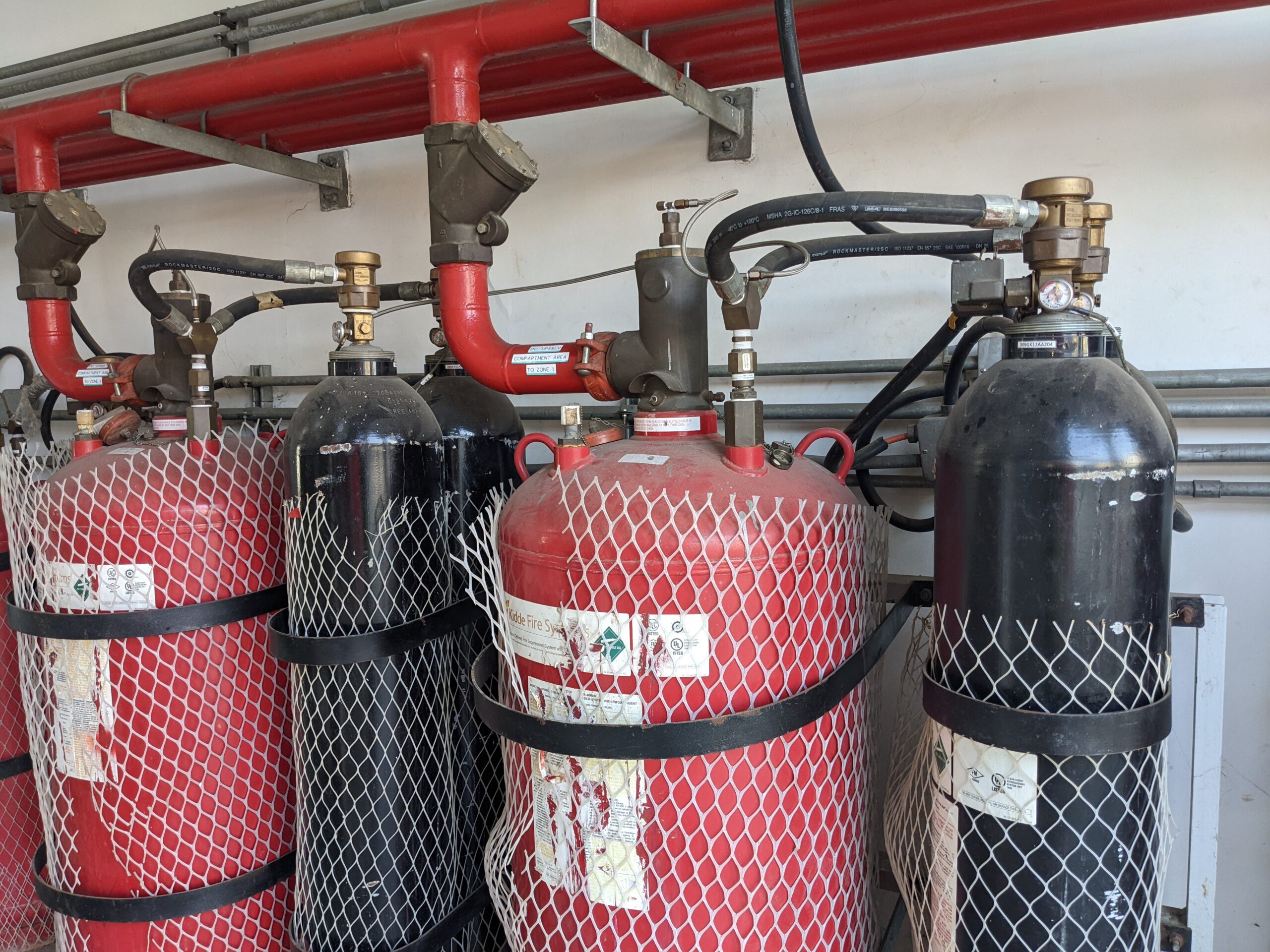
In practice, this means every vessel must be equipped with certified fire detection systems,
properly maintained extinguishers, suppression systems (like CO₂ or Novec 1230), and a
trained crew that can respond in an emergency.
Best practices for marine fire safety
Meeting regulations is one part of the equation, but building a true culture of safety on board
requires ongoing effort. Here are some practical best practices:
1. Regular Inspections and Maintenance
○ Fire extinguishers, alarms, and suppression systems should be tested and
serviced at set intervals.
○ Check for common hazards like oil leaks, faulty wiring, or blocked escape
routes.
2. Crew Training and Drills
○ Every crew member should know how to use firefighting equipment and follow
emergency procedures.
○ Conduct regular fire drills to ensure quick, coordinated responses.
3. Use of Approved Equipment
○ Always use fire safety equipment that meets international and UAE
standards. Non-compliant gear can lead to penalties—and greater risks
during an emergency.
4. Documentation and Compliance Records
○ Maintain proper records of inspections, servicing, and drills. These not only
prove compliance during audits but also help track ongoing safety.
5. Emergency Preparedness
○ Keep escape routes clear and ensure signage is visible.
○ Have contingency plans for different fire scenarios, such as engine room fires
or galley fires.
Compliance tips for vessel owners in the UAE
● Partner with certified marine safety service providers for inspections, servicing, and
refilling of firefighting equipment.
● Stay updated with UAE maritime circulars and guidelines, as requirements may
evolve.
● Schedule safety checks before major voyages or port calls to avoid delays or
penalties.
● Encourage a proactive mindset onboard—prevention is always more effective than
reaction.
Marine fire safety in the UAE isn’t just about ticking compliance boxes it’s about protecting
lives, vessels, and livelihoods. By aligning with international standards, following local
regulations, and building a culture of safety on board, vessel owners can ensure smooth
operations and peace of mind at sea.
Fire may be one of the oldest risks in seafaring, but with the right precautions, it doesn’t
have to be a threat.

