Subtotal $0.00


How Cascade Air Systems Improve Safety in Marine Operations
Working in marine environments comes with unique safety challenges. Ships, offshore platforms, and dockside facilities often involve confined spaces, hazardous gases, and emergency situations where reliable breathing air becomes essential. In these conditions, cascade air systems play a critical role in protecting workers and emergency response teams.
A cascade air system stores compressed breathing air in multiple high-pressure cylinders and releases it in a controlled sequence to refill breathing apparatus such as SCBA cylinders. While the technology may seem technical, its purpose is straightforward: ensure a consistent supply of safe, breathable air whenever crews need it. In marine operations, where emergency response time and worker safety are crucial, this reliability can make a significant difference.
The Safety Challenges in Marine Environments
Marine operations present risks that are very different from typical industrial workplaces. Workers frequently enter areas where air quality cannot be guaranteed. For example, ship tanks, cargo holds, ballast tanks, and engine rooms often have limited ventilation and potential gas buildup.
Some common atmospheric hazards in marine environments include:
- Oxygen-deficient spaces
- Toxic gases such as hydrogen sulfide or carbon monoxide
- Flammable vapors from fuel or chemicals
- Smoke during onboard fires
Because many of these hazards are invisible and odorless, workers may not immediately realize the danger. This is why breathing equipment like Self-Contained Breathing Apparatus (SCBA) is often required during inspections, repairs, or emergency response activities.
However, breathing equipment is only effective if there is a reliable way to refill air cylinders. This is where cascade air systems become essential for marine safety operations.
What Is a Cascade Air System in Marine Use?
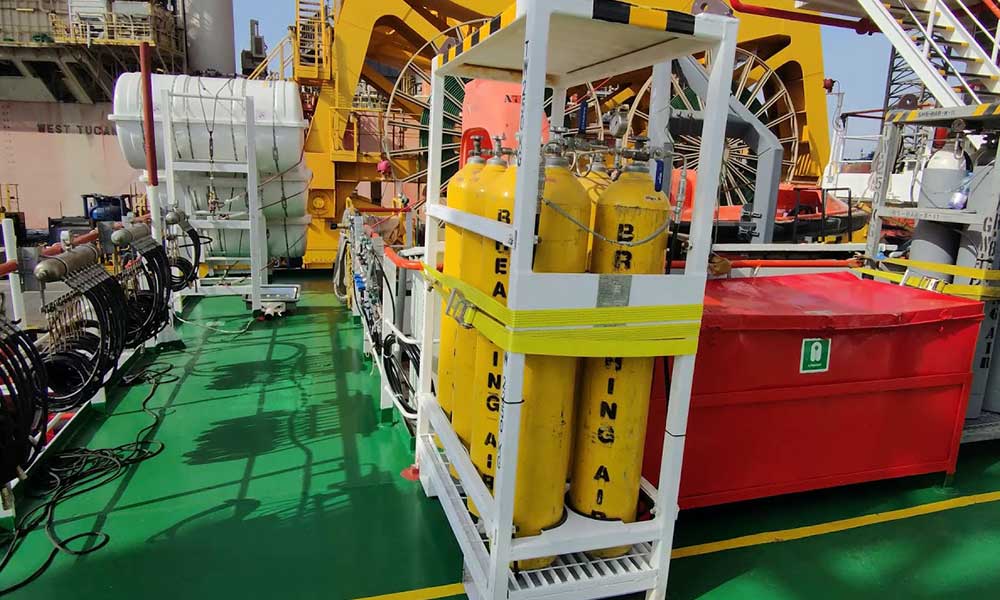
In marine operations, a cascade air system functions as a dedicated air storage and refilling station. Instead of relying solely on a compressor to refill breathing cylinders, the system stores compressed air in several large cylinders at different pressure levels.
These cylinders are connected through a control panel that allows operators to refill SCBA tanks quickly. Air is transferred sequentially from the storage cylinders to the SCBA cylinder, maximizing efficiency and ensuring proper pressure control.
Typical marine cascade systems include:
- High-pressure air storage cylinders
- Pressure regulators and gauges
- Control valves and manifolds
- High-pressure filling hoses
- Monitoring systems for air purity and pressure
This setup allows crew members or safety teams to refill breathing cylinders rapidly and safely, which is especially important during emergencies.
Supporting Emergency Response at Sea
One of the most important roles of cascade air systems is supporting onboard emergency response teams. Fires, chemical leaks, or mechanical failures can occur unexpectedly on ships and offshore installations. During such incidents, response teams must act quickly, often entering areas filled with smoke or hazardous gases.
Firefighters and rescue teams rely heavily on SCBA units when responding to these situations. Each SCBA cylinder typically provides around 30 to 60 minutes of breathable air, depending on the model and breathing rate. Once that air is used, the cylinder must be refilled before the responder can reenter the hazardous area.
Without a cascade system, crews might have to wait for a compressor to refill cylinders one at a time, which can take valuable time during emergencies. A cascade air system eliminates that delay by allowing multiple cylinders to be refilled quickly from stored compressed air.
This capability helps ensure that emergency teams can rotate personnel efficiently and maintain continuous response operations when every minute matters.
Protecting Workers in Confined Spaces
Confined space entry is a routine but high-risk task in marine maintenance. Workers may need to inspect or repair areas such as fuel tanks, cargo compartments, or ballast tanks. These spaces can contain dangerous gases or may lack sufficient oxygen.
Before entering such areas, safety procedures often require workers to carry or connect to breathing air equipment. Cascade air systems provide a reliable source of air to support these operations.
For example, during a tank inspection:
- Workers wear SCBA or supplied-air respirators.
- The breathing cylinders are filled using the cascade system.
- Backup cylinders are prepared in case additional air is needed.
This preparation ensures that workers can perform their tasks without worrying about running out of breathable air. It also provides a backup supply if unexpected conditions arise inside the confined space.
Ensuring Operational Readiness Offshore
Offshore oil and gas platforms operate in remote environments where safety equipment must always be ready for immediate use. Emergency evacuation, fire response, and rescue operations all depend on reliable breathing air systems.
Cascade air systems help maintain operational readiness by keeping multiple air cylinders filled and available at all times. Instead of refilling cylinders only after an emergency occurs, crews can maintain a constant reserve of compressed breathing air.
This approach improves preparedness in several ways:
- Emergency teams always have filled SCBA cylinders available
- Air refilling can be done quickly between operations
- Stored air acts as a backup if compressors fail
In remote offshore locations, this redundancy is extremely valuable because external support may not be immediately available.
Additional Benefits for Marine Safety
Beyond emergency response, cascade air systems offer several practical advantages for marine operations:
Efficiency
Multiple cylinders can be refilled quickly, reducing downtime during maintenance or emergency work.
Air management
The cascade process ensures compressed air is used efficiently without wasting pressure in storage cylinders.
Reliability
Stored air provides a backup supply in case compressors malfunction.
Compliance with safety standards
Many maritime safety regulations require reliable breathing air systems for confined space entry and emergency response.
These benefits make cascade air systems a standard feature in many modern ships, shipyards, and offshore installations.
Conclusion
Marine environments can quickly become dangerous when air quality is compromised. Fires, gas leaks, and confined spaces all create situations where workers must rely on breathing equipment to stay safe.
Cascade air systems support these operations by ensuring that clean, compressed breathing air is always available when needed. By enabling fast SCBA cylinder refilling and maintaining stored air reserves, these systems improve emergency response capability and protect workers performing critical tasks.
For ships, offshore platforms, and marine maintenance facilities, a well-maintained cascade air system is more than just equipment. It is a key part of a broader safety strategy designed to keep crews prepared, protected, and ready to respond to unexpected situations at sea.


Comments are closed