
Subtotal $0.00


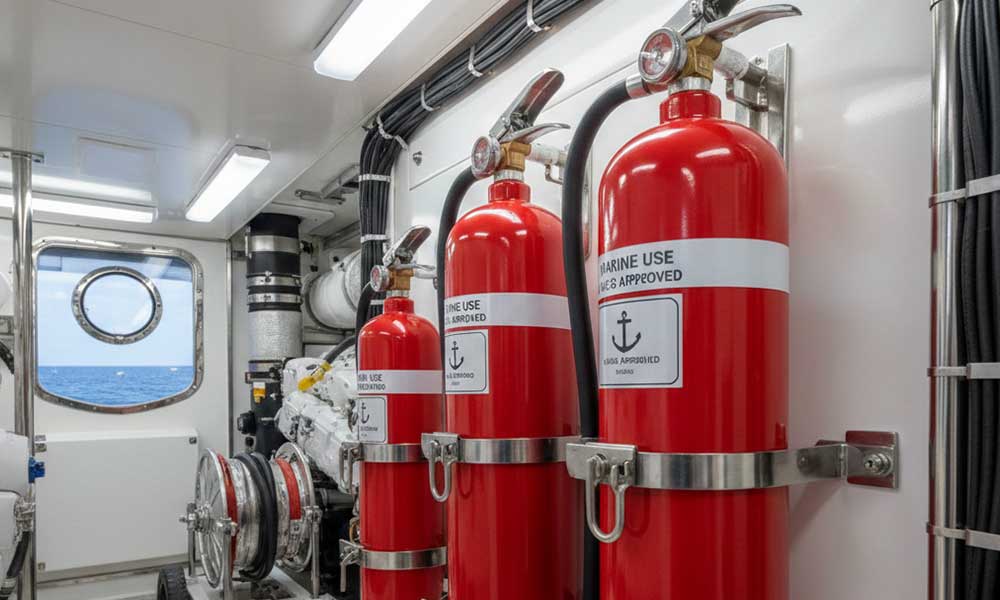
Fire Extinguishers for Marine Use: Types, Maintenance & UAE Compliance
Fire extinguishers are often the first line of defense when a fire breaks out onboard. They’re simple, familiar, and required on every vessel operating in UAE waters. Yet despite their importance, fire extinguishers are one of the most commonly non-compliant safety items found during marine inspections. Using the wrong type, missing accessories, or carrying expired units can quickly lead to inspection failure. This is why understanding marine fire extinguisher UAE requirements is essential for every vessel owner and operator.
Why Marine Fire Extinguishers Are Different
Marine environments are harsh. Salt air, humidity, vibration, and constant movement take a toll on safety equipment. Fire extinguishers designed for buildings are often not suitable for vessels.
Marine-approved extinguishers:
- Are corrosion-resistant
- Withstand vibration and movement
- Meet marine certification standards
- Are suitable for onboard fire risks
UAE authorities require extinguishers that are specifically approved for marine use—not just any commercial unit.
Common Types of Marine Fire Extinguishers
Different fire risks require different extinguishing agents. On a vessel, multiple extinguisher types are usually required.
Dry Powder Extinguishers
- Effective on fuel and electrical fires
- Common in engine rooms and deck areas
- Quick knockdown but leaves residue
CO₂ Extinguishers
- Suitable for electrical fires
- Leaves no residue
- Requires caution in enclosed spaces
Foam Extinguishers
- Effective on flammable liquid fires
- Often used on deck or near fuel storage
Choosing the right marine fire extinguisher UAE setup depends on vessel layout and fire risk assessment.
Placement Matters More Than Quantity
Inspectors don’t just check how many extinguishers are onboard—they check where they are installed.
Proper placement includes:
- Easy access in emergencies
- Clear visibility and signage
- Secure mounting brackets
- Protection from damage and corrosion
Incorrect placement can render an extinguisher useless during a real emergency.
Fire Extinguisher Accessories: Small Items, Big Impact
Missing or damaged accessories are a common inspection failure point. Fire extinguisher accessories UAE requirements include:
- Mounting brackets
- Safety pins and tamper seals
- Instruction labels
- Inspection and service tags
Without these, even a fully charged extinguisher may be considered non-compliant.
Inspection and Maintenance Requirements
Fire extinguishers must be regularly inspected and serviced to remain compliant. This includes:
- Monthly visual checks onboard
- Periodic professional servicing
- Pressure testing as required
- Replacement of expired units
Service records and tags are critical. Inspectors rely heavily on documentation to verify compliance.
Common Mistakes That Lead to Non-Compliance
Vessels often fail inspections due to:
- Expired extinguishers
- Incorrect extinguisher type
- Missing accessories or tags
- Corrosion or physical damage
- Unreadable labels
These issues are easy to fix—but costly if discovered during an inspection.
Why Professional Marine Servicing Makes a Difference
Professional safety marine services in UAE ensure:
- Correct extinguisher selection
- Proper placement and mounting
- Certified servicing and documentation
- Compliance with UAE and international standards
This proactive approach saves time, money, and stress.
Fire extinguishers may be basic safety tools, but on a vessel, they carry serious responsibility. Having the right marine fire extinguisher UAE setup supported by proper accessories, maintenance, and documentation can be the difference between a controlled incident and a disaster.
By staying proactive and working with experienced fire extinguisher accessories UAE and marine safety service providers, vessel owners can meet inspection requirements and protect what matters most.


Comments are closed